EN
EN  VI
VI 



Temperature sensors are a familiar technology in everyday life: from ordinary thermometers and household appliances like air conditioners and refrigerators to complex automation systems in smart homes and high-tech agriculture.
So, how do temperature sensors work? What are their practical applications and what role do they play in the cold supply chain? Let's find out in detail in the article below.
What is a temperature sensor?
A temperature sensor is a device used to measure the temperature of an object or its surroundings. The device is capable of detecting temperature fluctuations and converting them into data signals that are visually displayed as electronic indicators.
The most familiar example is the electronic thermometer used to measure body temperature daily. Household appliances such as refrigerators and air conditioners also incorporate similar sensors, but these are linked to more complex automated control systems.
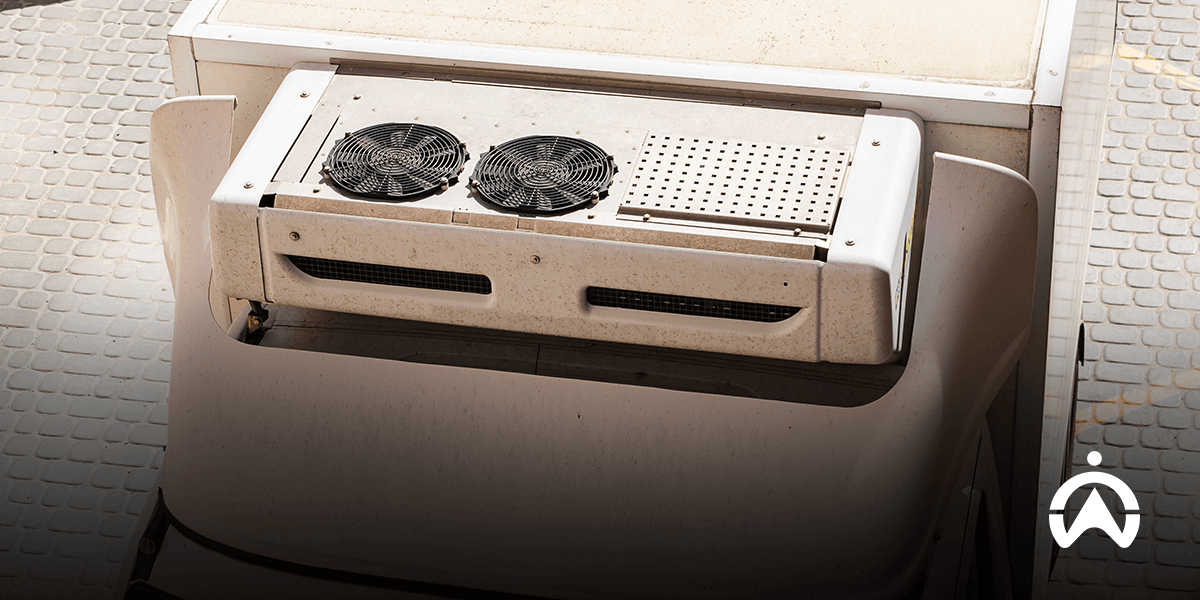
The operating principle of a temperature sensor.
Essentially, sensors work by detecting changes in temperature through materials or components with special heat-sensitive properties. This variation is then converted into an electronic signal for the system to record and process.
Beyond simply displaying readings, temperature sensors connect directly to a central controller to trigger automatic responses. For example, when a sensor is attached to the cooling system of a refrigerator or air conditioner, the device will automatically adjust the compressor power to maintain the set temperature. Similarly, in medical incubators or poultry incubators, the sensor will activate the heating element system when the ambient temperature drops below the standard level.
See moreApplications of IoT in fleet management technology.
Classification of common temperature sensors
As mentioned previously, temperature sensors work by detecting changes in temperature (hot or cold) in a particular material or substance. Below are some types of temperature sensors based on the material or substance used.
1. Thermistor
Thermistors operate on the principle of changing the electrical resistance of a semiconductor material as the ambient temperature varies. They are extremely sensitive to small temperature fluctuations, allowing for accurate measurements. However, these components are less durable in extremely harsh temperature environments and are easily affected by humidity.
Application: Electronic thermometers, household refrigerators, air conditioners.
2. Metal Resistance Temperature Detector (RTD)
RTDs operate based on a linear correlation between the resistance of a metal (usually platinum) and temperature: increasing temperature increases resistance, and vice versa. RTDs possess excellent accuracy, long-term stability, and durable operation in harsh environments. Their drawbacks include slower response times and higher costs.
Application: Medical testing laboratory, pharmaceutical storage facility, semiconductor production line.
3. Thermocouple
A thermocouple is constructed from two wires of different materials welded together at one end. When there is a temperature difference between the connector and the two free ends, a small electromotive force (voltage) is generated and converted into a temperature reading. Thermocouples can measure a very wide range of temperatures (from very low temperatures to thousands of degrees Celsius) but have only average accuracy and are susceptible to electromagnetic interference.
Application: Metallurgical furnaces, power plants, petrochemical refineries, and heavy industry.
4. Infrared Sensor
All objects in nature continuously emit thermal radiation. Infrared sensors detect this heat to accurately calculate temperature without directly touching the object. The main advantage is non-contact measurement and instantaneous results. The disadvantage is that it only measures surface temperature and is easily affected by dust and moisture in the environment.
Application: Remote temperature gun, for checking for overheating of machine components, mechanical diagnostics.
Practical applications of temperature sensors
Temperature sensors are integrated into many devices in our daily lives, serving both household and industrial needs.
1. Household appliances
Air conditioners and refrigerators are examples of temperature sensor applications that are most closely related to our daily lives. Essentially, the sensors in these two electronic devices are not simply used to measure temperature, but are also integrated into a specialised operating mechanism.
In refrigerators and air conditioners, thermistors are used to detect temperature and connect directly to the controller to turn the compressor on/off. Therefore, whenever the room temperature rises above the desired setting, the cooling system will automatically activate.
2. Healthcare & Pharmaceuticals
In the medical field, temperature sensors are commonly found in thermometers and incubators. Thermometers typically utilise thermistors, thermocouples, or infrared sensors; while infant incubators often employ thermistors or RTD sensors.
A thermometer simply measures body temperature and converts it into a digital reading displayed on a screen. In contrast, an incubator uses a temperature sensor linked to a central controller to automatically activate the heating system when needed.
3. Technology
In the field of technology, temperature sensors are present in almost every device, from smartphones and laptops to smartwatches. Besides measuring temperature, these sensors are often linked to controllers to automatically cut off power or shut down the device to protect components in case of overheating.
Furthermore, temperature sensors are a core component of the IoT (Internet of Things) ecosystem, particularly in smart home models. IoT-integrated temperature sensors can remember users' habits to automatically adjust room temperature, optimizing comfort while effectively saving energy.
4. High-tech agriculture
In agriculture, temperature sensors are used to measure soil temperature, monitor greenhouse/polyhouse environments, and control temperatures in post-harvest storage facilities. With the development of IoT technology and smart agriculture, all this measurement data can be monitored and accessed remotely.
Temperature sensors are not only useful in agriculture, but also in the livestock industry. These devices help farmers continuously monitor barn temperatures to maintain ideal levels for livestock and poultry such as chickens and cattle, ensuring animal health and effectively preventing disease outbreaks.
5. Cold chain supply
The cold chain supply industry demands extremely rigorous temperature monitoring processes due to its direct management of heat-sensitive products. Typical examples include frozen foods, pharmaceuticals, vaccines, and other biological products that require absolutely stable temperatures throughout the transportation process.
Temperature sensors can be installed synchronously from central storage facilities and refrigerated containers to vehicles in the last-mile delivery fleet. As soon as temperature fluctuations exceeding safe limits are detected, transportation companies can immediately conduct inspections and address the issue promptly.
See more: Comprehensive fuel monitoring solution with Cartrack & MiFleet sensors.
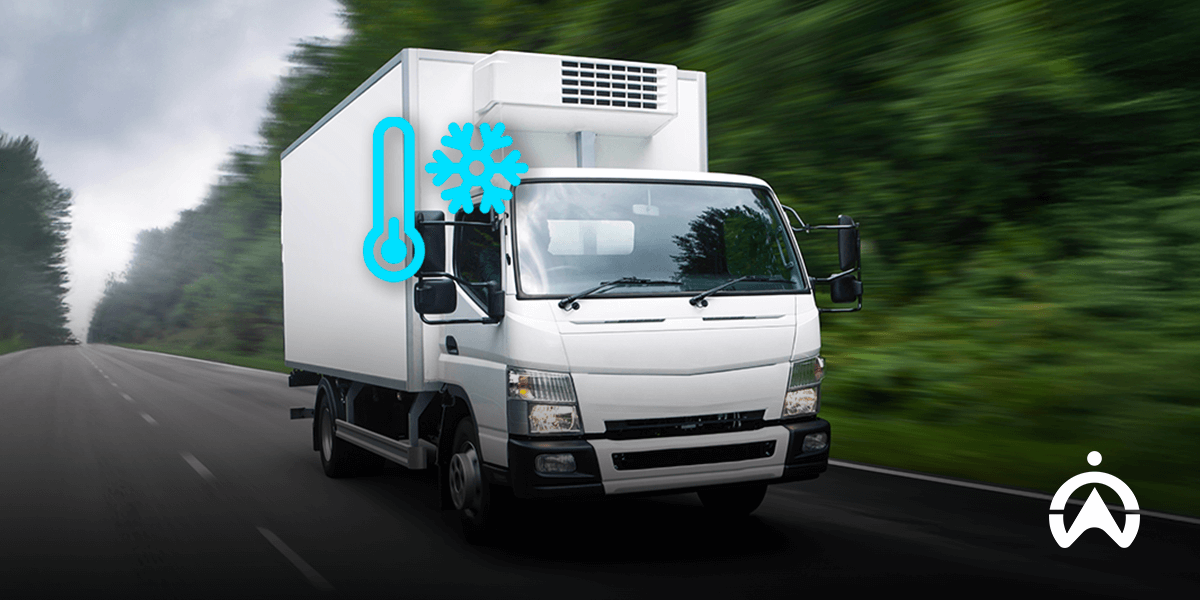
Cartrack IoT temperature sensors: The ultimate solution for the cold supply chain.
Continuous temperature monitoring is a mandatory requirement for refrigerated transport businesses. Cartrack's IoT Temperature Sensor solution enables remote management of all cargo compartments in real time:
1. Ensuring product quality: Meeting the stringent standards of the WHO and the Ministry of Health regarding the storage of pharmaceuticals, vaccines, and food safety and hygiene standards.
2. Preventing the risk of damage: Instant alerts are provided when the temperature inside the vehicle exceeds safe limits, enabling drivers and managers to intervene promptly on long journeys.
3. Enhance brand reputation: Providing customers with transparent temperature chart logs demonstrates that the transportation process meets standards from the point of origin to the final delivery point.
AntarEs, a refrigerated transport company, elevates its management with Cartrack.
One of Cartrack's flagship clients for implementing temperature sensors is AntarEs—a company specializing in the cold chain supply industry. AntarEs provides high-end logistics services for frozen products with extremely stringent quality standards.
This company has achieved prestigious international certifications including: ISO 22000 (Food Safety Management System), GDP (Good Distribution Practice for Pharmaceuticals), and HACCP (Hazard Analysis and Critical Control Points). Operating a network in 25 cities in Indonesia, AntarEs owns a diverse fleet of vehicles requiring a professional and rigorous management process.
AntarEs has confidently chosen Cartrack's complete fleet management solution: from GPS tracking devices, AI cameras to monitor driver behavior, in-cabin cameras, cargo door sensors to specialised temperature sensors. All these technological solutions are implemented to ensure the entire fleet operates strictly according to the company's established procedures and highest quality standards.
Temperature Sensor Solutions for AntarEs Cold Chain Company
One of Cartrack's customers who has used temperature sensors is AntarEs, a company operating in the cold chain industry. AntarEs provides premium service for frozen products to high standards.
This company has obtained ISO 22000 certification, Good Distribution Practice (GDP) guidelines, and Hazard Analysis and Critical Control Points (HACCP) certification. Operating in 25 cities across Indonesia, AntarEs has a diverse fleet that must be well-managed.
AntarEs entrusted Cartrack with its Fleet Management solution, encompassing GPS, AI cameras, interior cameras, cargo door sensors, and temperature sensors. All of this is to ensure that the fleet operates according to the company's established procedures and quality standards.
Contact Cartrack Vietnam now! To receive expert advice on refrigerated fleet management solutions and schedule a free demo, fill out the form below to get a trial and special offers from Cartrack!
See more: 4 Outstanding Benefits of Cargo Door Sensors for Transportation Businesses in Vietnam