EN
EN  VI
VI 



What is the best fleet management solution for small businesses?
Are you a small business owner looking for the optimal solution to manage your fleet? Perhaps you feel your current operations are under control and don't see the need for a specialized solution. However, one principle any small business owner should remember is: always think big.
What is a small business?
Small businesses are typically limited liability companies, partnerships, or sole proprietorships with a lean workforce and lower revenue compared to medium-sized enterprises. Small businesses exist in many forms and operate in diverse industries, from restaurants and bakeries to plumbing and electrical repair services, construction, e-commerce, and retail fashion stores.
What is fleet management?
Fleet management is a term encompassing all the activities and processes necessary to operate a fleet of vehicles efficiently, safely, and cost-effectively.
A fleet of vehicles can include passenger cars, buses, trucks, or commercial vehicles directly serving a business operation. The core objective of fleet management is not only to simplify the drivers' work but also to minimize the management burden on the fleet operator.
What are the responsibilities of a fleet manager in a small business?
A fleet manager has several responsibilities regarding the fleet, including:
-
Driver management: Responsible for monitoring the behavior, attitude, and performance of actual drivers, and organizing necessary professional training programs.
-
Documents and records: Responsible for maintaining and accurately updating the entire fleet record and data system, including maintenance and repair logs and vehicle inspection schedules.
-
Fuel management: Ensure the fleet always operates with optimal fuel efficiency by monitoring consumption levels and promptly detecting any losses or waste.
-
Maintenance and repair: Maintain the technical condition and readiness of your vehicle by proactively planning regular inspections and maintenance.
-
Managing operating costs: Monitoring and optimizing all cost items associated with the vehicle fleet, from fuel consumption to vehicle operating efficiency, in order to improve the return on investment (ROI).
For a fleet manager, this is a huge workload, especially when facing the specific challenges that small businesses often encounter. Let's take a look at these challenges.
What challenges do small businesses typically face when managing a fleet of vehicles?
Due to their limited scale, small businesses face many unique barriers that can directly impact their growth momentum and competitiveness. The most common challenges include:
-
Limited resources: Without owning a large fleet of vehicles, fulfilling all orders and schedules, especially during peak periods, becomes a heavy burden. This can easily lead to vehicles being constantly overloaded, rapidly increasing maintenance costs and wear and tear.
-
Unexpected repair and maintenance costs: With limited contingency budgets, small businesses struggle to cope with unexpected repair bills caused by unforeseen incidents, placing a significant burden on their cash flow. These unplanned expenses also disrupt entire transportation operations.
-
Unscheduled vehicle downtime: Unplanned vehicle downtime is a major headache for any business, but the damage is even more severe for small businesses. Without immediate backup vehicles, the time spent idle seriously impacts delivery productivity, leading to decreased revenue and directly damaging brand reputation with customers.
-
Difficulties in tracking and managing vehicles and drivers: Small businesses often lack the time, sophisticated monitoring tools, and dedicated personnel compared to larger corporations, making it difficult for managers to accurately track the actual location of vehicles and how drivers operate them on the road.
-
Traffic safety risks and driver behavior: Ensuring drivers comply with traffic safety regulations is always a top priority, but due to a lack of investment in sophisticated driving behavior monitoring solutions, the safety risks for small businesses are often higher. This also leads to increased accident rates and reduced fuel efficiency of the vehicle fleet.
-
Fuel costs are rising: Fuel accounts for a significant portion of a small business's total operating costs, especially when there are no effective measurement and control mechanisms. Consistently high fuel consumption will directly erode profit margins and the financial health of the business.
-
The rate of driver turnover is high: Due to limited compensation budgets, small businesses struggle to compete with the attractive benefits packages offered by large transportation companies. This poses a difficult challenge for managers in maintaining the engagement, satisfaction, and retention of experienced drivers.
These challenges, while complex, can be completely resolved through a comprehensive, accessible, and cost-effective technological solution: a specialized fleet management software system.
What are the benefits of using fleet management software?
Essentially, fleet management plays a fundamental role in ensuring the entire transportation process runs smoothly, efficiently, and sustainably. Fleet management software is designed to automate and streamline every operational step with outstanding value:
-
Optimize route planning: Scientific route planning is key to transportation operations, directly impacting operational efficiency, fuel costs, and customer satisfaction. Software assists dispatchers in establishing the most optimal routes based on analysis of shortest distances, traffic congestion, and the permissible load capacity of each vehicle. Optimized routes minimize fuel consumption and reduce component wear, thereby significantly reducing variable costs. Conversely, poorly planned routes will cause vehicles to travel many wasted kilometers, wasting time and fuel. By shortening routes and optimizing travel time, businesses can save a significant amount of money.
-
Minimize fleet operating costs: One of the most significant benefits of fleet management software is its unparalleled ability to provide comprehensive and transparent monitoring. Instantaneous tracking of driver behavior, vehicle condition, fuel consumption, and cargo safety allows managers to tightly control all cost items. Through the integration of fuel sensor technology, route automation, and scheduled maintenance, the software is a powerful tool for drastically reducing wasteful operating costs.
-
Improve service quality and customer satisfaction: Customer experience is vital to the growth of small and medium-sized enterprises (SMEs). Through real-time location tracking and visual route monitoring, managers can proactively update customers on delivery progress and provide the most accurate estimated time of arrival (ETA). Drivers represent the company's image; therefore, ensuring safe driving behavior not only minimizes the risk of damage to goods but also enhances service reputation. Regular vehicle maintenance schedules also ensure timely delivery, minimizing delays due to roadside incidents.
-
Improve vehicle performance and extend its lifespan: Vehicle stability and longevity are vital for small businesses – where the number of vehicles is limited and continuous reinvestment is difficult. Fleet management software provides preventative maintenance alerts, helping to detect potential breakdowns early before they become serious, protecting drivers' safety and maintaining fleet productivity. This helps businesses avoid costly operational disruptions that degrade service quality. Asset performance tracking allows managers to identify which vehicles are being overutilized, enabling them to distribute workloads evenly and prevent localized wear and tear on individual vehicles.
-
Facilitating decision-making based on accurate data: All fleet management decisions must be based on factual data, not intuition. A fleet management platform provides in-depth, intuitive analytical reporting, making it easier for administrators to make more strategic and informed decisions.
-
Simplify remote operation and management processes: Small businesses need to maximize their available lean resources. The ability to comprehensively monitor vehicles and drivers anytime, anywhere through a cloud platform allows managers to maintain seamless connectivity with their driver team, providing support and resolving issues 24/7, thereby significantly improving operational efficiency and safety on every trip.

How does fleet management software address the challenges faced by small businesses?
The core objective of fleet management software is to automate and standardize complex tasks within the transportation process. Here are four technological methods that help achieve this:
-
Real-time GPS positioning and monitoring: Real-time vehicle monitoring utilizes GPS positioning technology combined with telecommunications systems to continuously track the coordinates, travel routes, and operating status of vehicles 24/7. This technology allows managers to improve dispatch efficiency, ensure driver safety, maximize vehicle capacity, and minimize operating costs. Through real-time monitoring, management always has sufficient data to make accurate decisions. The technology delivers specific benefits:
-
Real-time visual vehicle monitoring capabilities: Providing continuously updated information on digital maps helps managers accurately track the location of each vehicle at any given time.
-
Completely prevent the misuse of vehicles: Thanks to detailed vehicle tracking data, administrators can immediately detect instances of drivers using company vehicles for personal purposes or traveling outside their assigned work areas.
-
-
Automate maintenance schedules and technical alerts: The system digitizes the entire process of managing, monitoring, and scheduling maintenance and periodic inspections for each vehicle and piece of equipment. Through an automated alert and reminder system, managers maintain a proactive approach to vehicle maintenance, effectively controlling the technical condition of the entire fleet with the following benefits:
-
Reduce major repair costs: The system sends alerts as soon as it detects abnormal parameters, helping to thoroughly address technical problems early on, preventing issues from progressing to serious damage and incurring costly expenses.
-
Increase the lifespan of the vehicle: Automating scheduled maintenance and oil changes helps vehicles maintain optimal operating conditions, minimizing costly overhauls or premature component replacements.
-
Ensure compliance with vehicle inspection and technical safety standards: By maintaining detailed maintenance logs and promptly addressing technical faults, the system ensures that all vehicles consistently meet all technical safety standards and legal requirements for operation.
-
-
Fuel consumption management and control: Fuel management in transportation is the process of measuring, monitoring, and closely controlling the fuel consumption of each vehicle. A fuel management system that utilizes telematics technology and automation software to measure consumption levels, control refueling quantities, and detect waste completely replaces the time-consuming and costly manual record-keeping methods of the past. This solution is particularly important because it offers:
-
Prevent fuel loss and theft: It provides real-time fuel level data, helping to immediately detect fuel theft, invoice fraud, or counterfeit fuel cards.
-
Completely eliminate errors caused by manual data entry: Digitizing the fuel control process completely eliminates human error, ensuring the integrity of vehicle and driver data. Managers no longer have to rely on manual ledgers or spreadsheets that are prone to errors and can harm financial performance.
-
Standardizing fuel-efficient driving behavior: By identifying and correcting bad habits that waste fuel (such as idling for too long, sudden acceleration), managers can significantly improve the fuel efficiency awareness of their drivers.
-
-
Driver behavior monitoring system: Driver monitoring technology continuously analyzes and evaluates the actual driving behavior of drivers while operating vehicles on the road. The system operates through the synchronized integration of AI cameras, sensor systems, and GPS devices. The platform establishes standard safe behavior thresholds and automatically triggers instant alerts when it detects violations or unsafe behaviors. Whether it's drowsiness, signs of fatigue, or distracted behavior, the technology helps drivers correct these issues promptly while driving, providing clear benefits.
-
Minimize distractions while driving: Detecting signs of distraction such as frequently looking away from the steering wheel or looking down at their phone provides immediate warnings, helping drivers focus on their surroundings and prevent collisions.
-
Preventing risks caused by driver fatigue and drowsiness: Identifying signs of exhaustion such as frequent yawning and prolonged eye closure allows drivers to stop and rest promptly, minimizing the risk of serious traffic accidents caused by falling asleep at the wheel.
-
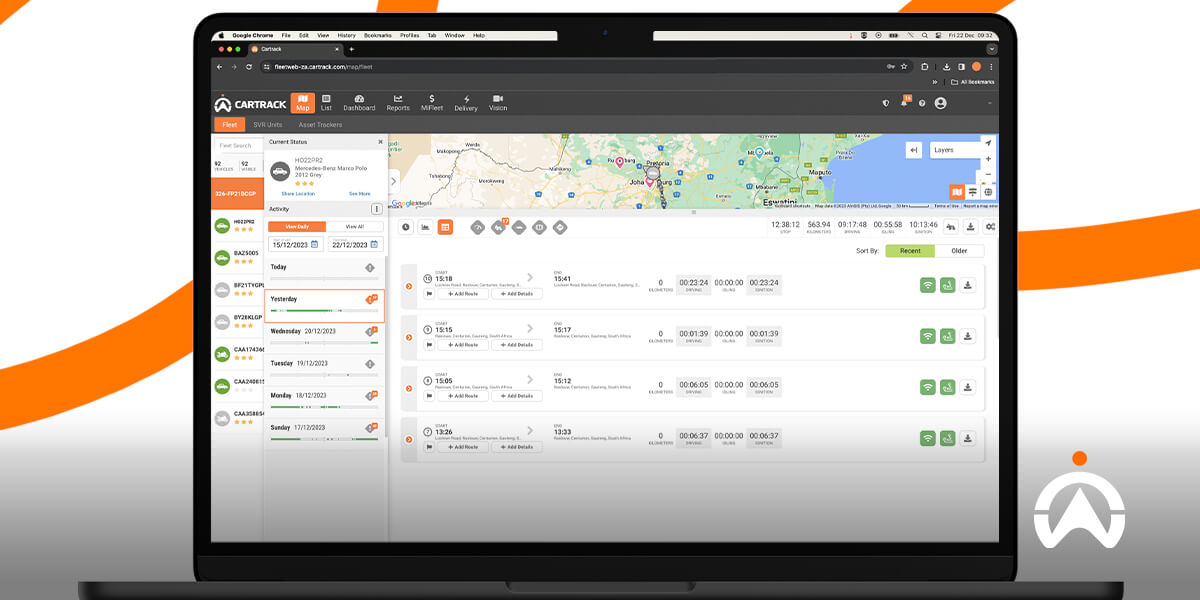
Enhance your business operational efficiency – from small to large – with advanced fleet management solutions from Cartrack.
Cartrack's fleet management ecosystem provides a comprehensive solution that fully meets all specific transportation needs, helping businesses overcome all operational barriers. Below are 9 outstanding values that Cartrack brings to small and medium-sized enterprises:
-
Camera AI Live Vision: Receive real-time alerts about dangerous or distracted driving behaviors with Cartrack's AI Live Vision camera solution. The platform combines intelligent cabin cameras with AI computer vision technology to analyze driver behavior in real time. When it detects risks such as speeding, yawning, using a phone, or smoking while driving, the system will broadcast an audible warning in the cabin so the driver can take immediate corrective action. Simultaneously, managers also receive instant notifications and can view live video broadcasts from the cabin.
-
Online GPS tracking: Accurately monitor the real-time location of each vehicle in your fleet with Cartrack's live GPS tracking system. As a small business, you can leverage this precise journey data to comprehensively assess and optimize transportation performance. The real-time tracking system also provides robust security, protecting assets and vehicles 24/7.
-
Geofencing: Control the operational range of vehicles and specialized equipment with Cartrack's Geofencing feature. This solution allows you to establish virtual geographic boundaries around key areas to closely monitor vehicle and driver activity. As soon as a vehicle enters or leaves a defined area, the system sends instant alerts, giving you a clear understanding of any operational changes.
-
Cargo container security monitoring: Ensure the absolute safety of your goods throughout the transportation journey with Cartrack's specialized cargo monitoring solution. Integrated seamlessly into the SmartCabin ecosystem and utilizing artificial intelligence, the cargo monitoring cameras provide a comprehensive, visual overview inside the vehicle's cargo compartment. The system allows for simultaneous live viewing from four camera angles and quick extraction of journey video data. The solution also incorporates Cartrack's proprietary cargo door opening sensor, triggering an instant alert upon unauthorized opening of the cargo door.
-
Vehicle preventive maintenance management: Maintain perfect technical condition for your entire fleet with Cartrack's intelligent preventative maintenance features. Utilizing artificial intelligence and advanced technical analysis algorithms, the software automatically analyzes operating conditions and provides early warnings of potential malfunctions before they escalate into serious, costly problems. The system provides alerts for brake pad wear, low oil and coolant levels, and reminders for scheduled maintenance, helping businesses proactively plan repairs and minimize accident risks and associated costs.
-
Fuel consumption sensors and management: Precisely control every liter of fuel consumed with Cartrack's advanced fuel measurement system. This automated fuel cost management solution reconciles fuel refueling transactions, matching invoices with real-time vehicle operational data to provide a transparent, real-time picture of fuel consumption. Thanks to dedicated fuel sensors installed directly in the tank, you can accurately monitor consumption per kilometer, effectively prevent fuel theft, and optimize your fleet's fuel efficiency.
-
Optimize transportation routes: Plan the fastest and safest routes for your drivers with Cartrack's route optimization tool. Integrated directly into the Delivery app, this feature provides real-time alerts when vehicles deviate from their designated routes or encounter traffic congestion, helping to shorten delivery times and improve customer satisfaction. Dispatchers can also easily track the operational status of each driver to allocate orders to the nearest available driver.
-
MiFleet fleet expense management software: Gain a precise understanding of your fleet's financial picture and actual operating costs with Cartrack's MiFleet software. Whether your business owns one vehicle or a hundred, managing operating cash flow is always a top priority. MiFleet is a comprehensive vehicle cost management tool that helps track all fleet expenses, from registration fees, insurance, road tax, depreciation to maintenance and fuel costs. Through intuitive financial reports, businesses can maximize their potential to reduce fuel waste and streamline administrative costs.
Are you looking for a comprehensive and cost-effective fleet management solution for your business? Contact Cartrack via the link below for a detailed consultation!